

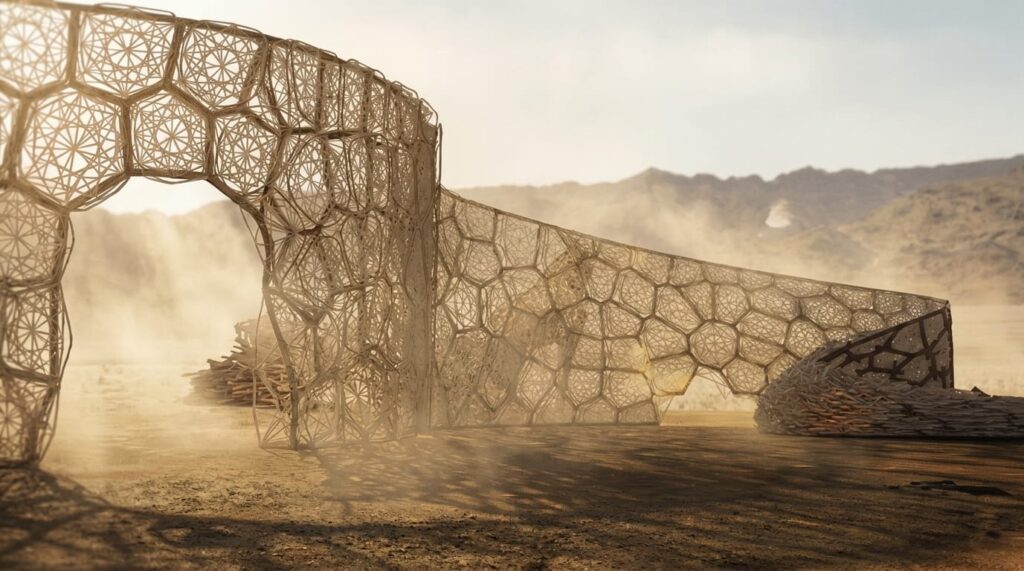
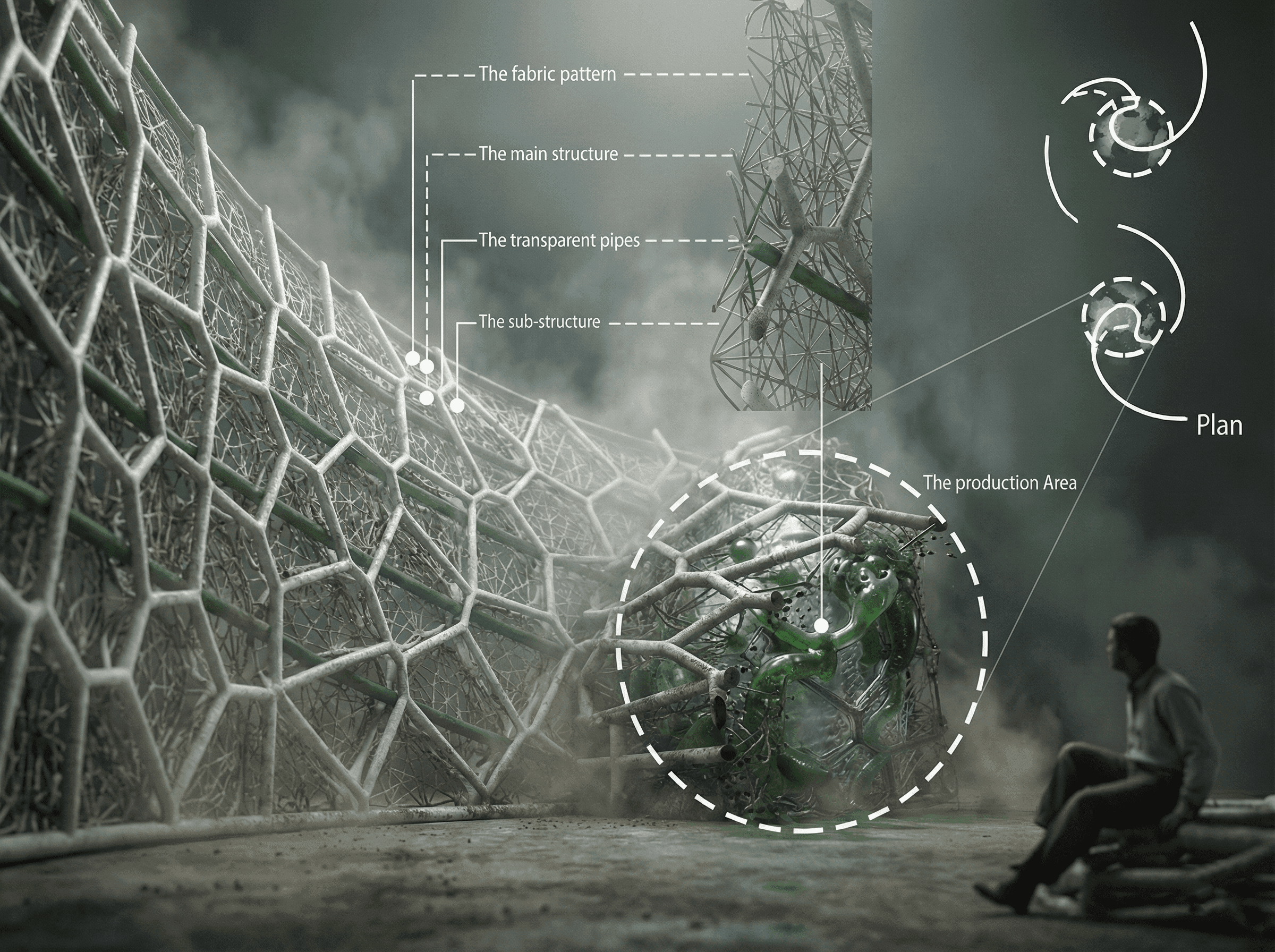
The Algae Pavilion was designed for places where food, clean water and shade are all scarce at once. Rather than treating the structure and the food supply as two problems, it makes them the same one: a computational shell whose cells carry transparent tubes, and the tubes grow spirulina.
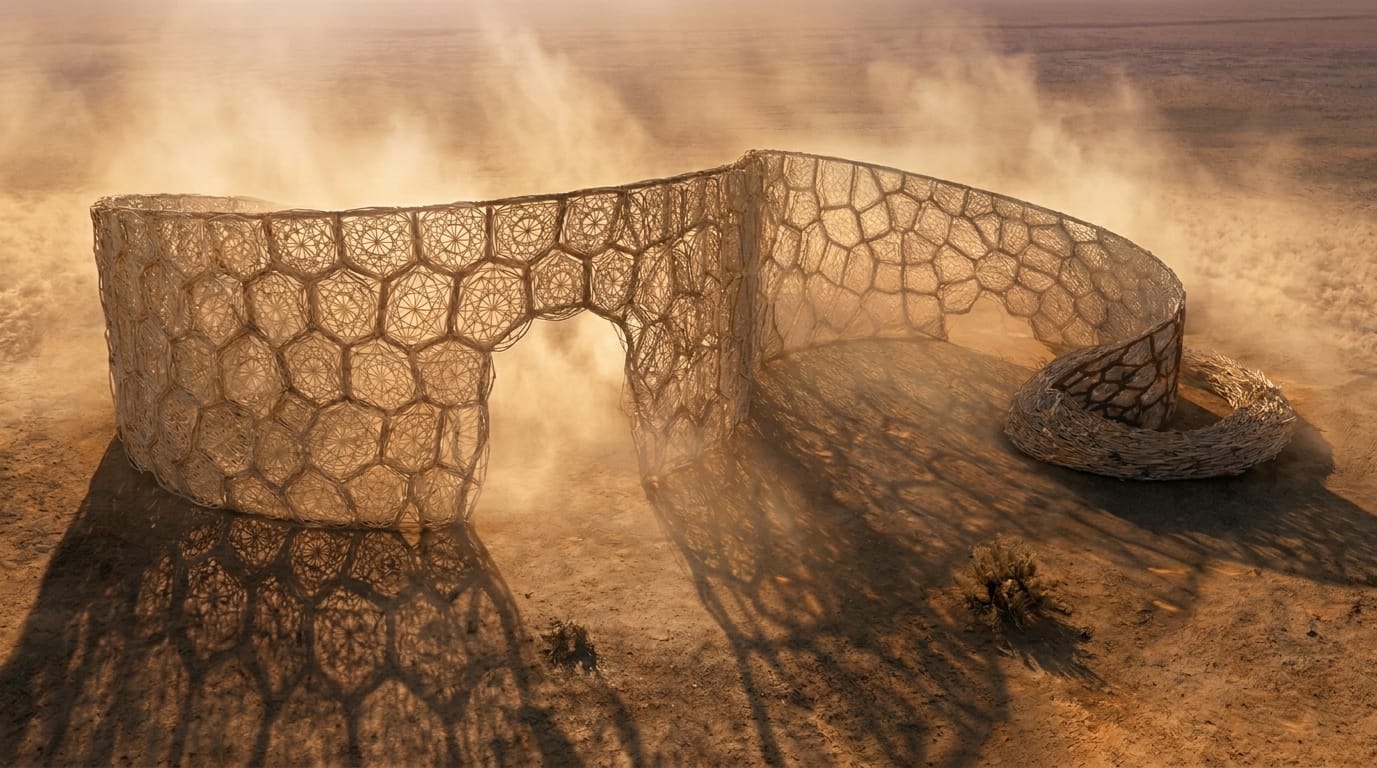
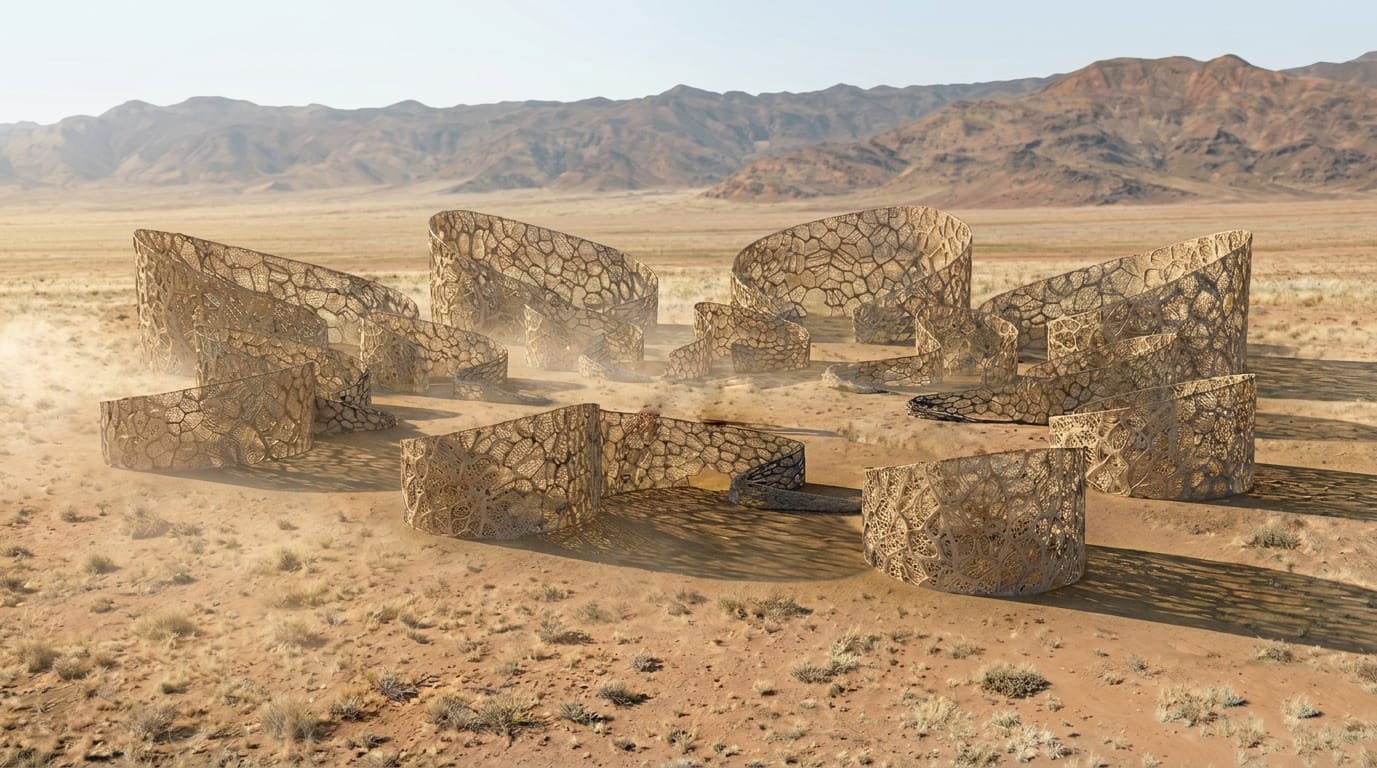
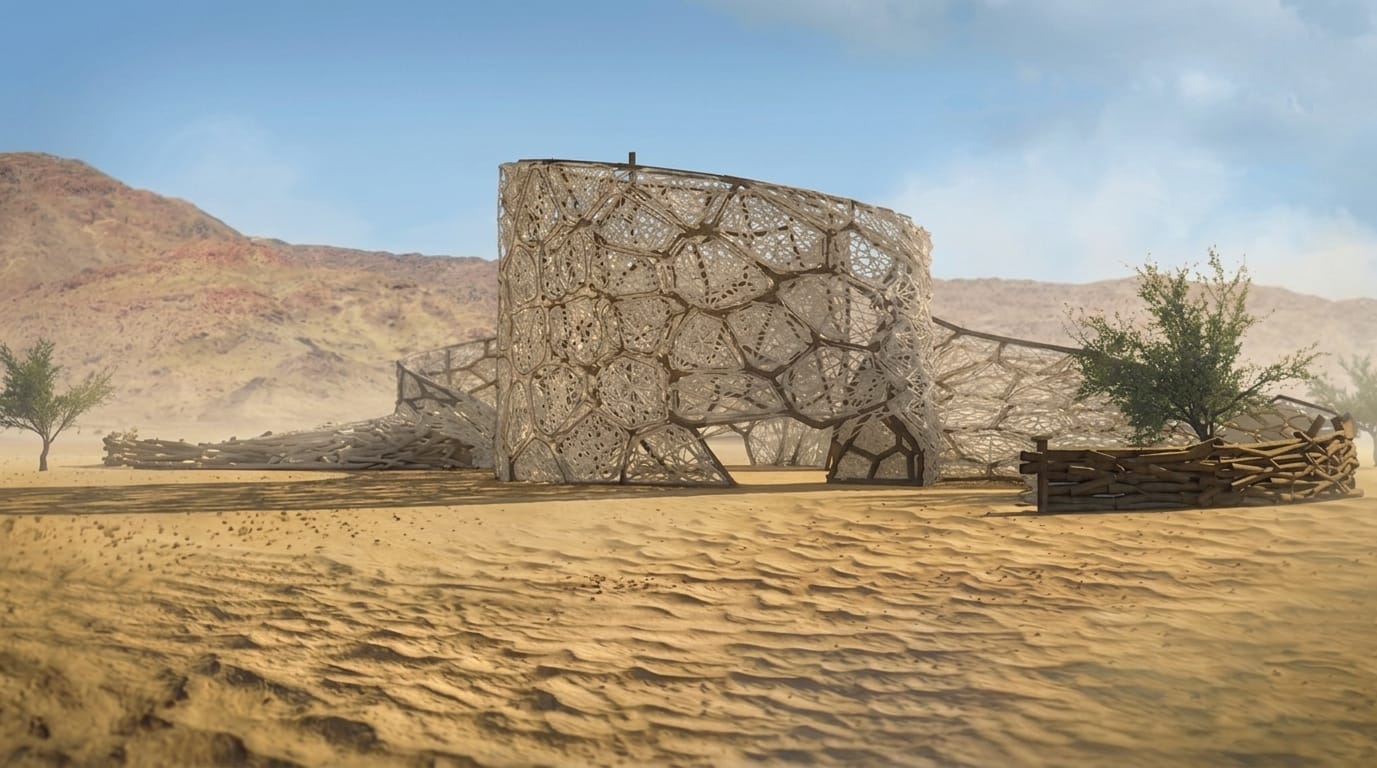
The geometry comes out of a computational design process, a cellular pattern that varies across the surface so the shell can curve, enclose and open without a repeating module. Four layers do the work: a woven sub-structure, the main structure, the transparent pipes that hold the culture, and the fabric pattern that gives the skin its density and its shade. It is built from local timber and bundled brush, and the competition budget was under $1,000.
Cultivation runs in four steps. The tubes are charged with a sterile, mineral-rich growth medium rather than untreated pond water, so the culture stays clean. The medium circulates through the closed tubular loop, which maximizes solar exposure and holds around 35 degrees Celsius. Biomass doubles roughly every three days, then it is harvested, filtered and dried into powder. What comes out is a nutrient-dense food that can be eaten directly or worked into supplements and drinks.

Have a project like this?
Tell us the type and the stage you're at, and we'll share relevant examples, along with how we'd approach the design, the model and the documentation.